Skip to the guide

Complete Guide & Mechanics for Sweet Jelly Cascade

Sweet Jelly Cascade looks like an ordinary swap-and-match board and then quietly stops behaving like one, because most of its stages are not asking you to clear tiles at all — they are asking you to clear what sits underneath them. This sweet jelly cascade strategy guide works through the three stage types the game actually uses, and the arithmetic that decides whether a board is still winnable eight moves from the end.

Written and kept current by Daniel Taylor in Toronto. Free to read, no account, no sign-up, and email is the only way to reach us.

Start with the board

Platform
Android phones and tablets
Board type
Swap and match, with layered objectives beneath the tiles
What this page is
Mechanics and tactics. No scores, no ratings, no download links.

What a jelly board is really asking for

The tiles are decoration. That sounds glib, but it is the single most useful thing to understand about this format: on the great majority of stages, the coloured pieces you swap are not what the game is counting. It is counting gel squares removed, ingredients delivered, or points banked, and the tiles are simply the mechanism.

Once you accept that, the shape of a good move changes. A satisfying five-in-a-row across the top of the board is worth almost nothing on a gel stage, because there is no gel up there left to clear. A scruffy match of three in the bottom-left corner, where two gel squares are still covered, is worth considerably more. Players who plateau in this genre almost always plateau because they are still optimising for the tiles.

The three stage types below cover nearly everything the game will throw at you. Each has a different failure mode, and each wants a different first move.

The three stage types, what each counts, and where each one is usually lost
Level type Primary goal Where it goes wrong What to do first
Clear the Gel Remove every layer beneath the tiles Corners the board never refills into Open the two hardest corners while moves are cheap
Ingredient Drop Walk items down to the lower boundary Matching beside the item instead of under it Empty the column directly below the item
Timed Challenge Reach a score target before time runs out Fast small matches instead of large ones Find the biggest cluster on screen and take it

A description of how the three formats behave in play. Objective counts, timers and board layouts differ between versions; the app’s own store listing and in-game help are the current source for any specific title.

What is deliberately absent

No stage-by-stage solutions. Boards get reseeded between updates, and a written answer for a numbered stage is wrong within a couple of releases while still looking authoritative.

No ratings or download counts either. Those move weekly on the store, and a static page repeating them is stale by the time anyone reads it.

Go to gel layers

Gel layers, and why the bottom row does the work

Gel stages are the most common and the most misplayed. Two facts explain nearly all of it.

Gravity

Everything falls, nothing slides

New tiles enter at the top of a column and drop straight down. They never move sideways on their own. A column you empty is a column you have rerolled; a column you never touch keeps the same tiles for the whole stage, and if there is gel under those tiles it stays covered.

Position

A low match disturbs more

Clear three tiles on the bottom row and every tile in those columns shifts down one, meets a new neighbour and often matches again for free. Clear three on the top row and the gap fills from off-screen, where nothing can connect. Same move, wildly different value.

Geometry

Corners starve

The far bottom corners are fed by exactly one column each, and only when that column moves. On a board with an awkward outline they can go untouched for twenty moves. If gel is sitting in one, treat it as the whole stage and route your matches toward it from move one.

Double layers

Two hits, not one

Later stages stack gel two deep, which means the same square has to be cleared twice. That doubles the real objective count without changing the number on screen, so a board that looks comfortably within your move budget can be a long way outside it. Count layers, not squares.

Ingredient drops: clear the column, not the item

An ingredient stage puts one or more large objects on the board and asks you to move them to the bottom edge. Almost every player’s first instinct is to match next to the object, which does nothing at all: the object only moves when the tile beneath it disappears and gravity pulls it down one row.

So the job is vertical. Look straight down from the object to the bottom of the board and count what is in the way. That column is your work. Matches made elsewhere are not neutral either — they consume moves and reshuffle the column you were about to clear, which is why ingredient stages punish improvisation more than any other type.

Two complications recur. Blockers sitting in the drop column have to come out first, and they usually need a special piece rather than an ordinary match. And on wide boards with two ingredients, the columns often overlap, in which case work the shared column and both objects descend together.

The one-line version

Never match beside an ingredient. Match beneath it, and only beneath it, until the column is empty.

On to the move counter

Reading the move counter against the objective

One piece of arithmetic replaces most of the advice written about this genre.

Take what the objective panel still needs. Divide it by the moves you have left. That number tells you what every remaining turn has to average, and it changes what counts as a good move immediately.

Below roughly one and a half objective tiles per move, ordinary matches will get you there and the correct play is patience: work low, keep the board moving, do not spend anything special. Above three, ordinary matches will not close the gap no matter how neatly you play, and the only route is a large combination — which means spending a move or two positioning rather than clearing. Between the two is where judgement lives.

The reason this matters is that the game gives you no warning. Nothing on screen tells you a stage has become unwinnable, and most players discover it with three moves left. Running the division at the halfway point costs nothing and tells you eight moves earlier.

Four checks before you open a stage

Each takes a few seconds and each is checkable on your own screen rather than taken on trust.

  1. Read the objective panel before the board. Gel, ingredients and score want different opening moves. Deciding after three swaps means those three swaps were guesses.
  2. Find the two hardest corners. On an irregular board outline, one or two corners are fed by a single column. Note them now; they are where the stage will be won or lost.
  3. Count layers, not squares. Double-layered gel doubles the real work without changing the number on screen.
  4. Run the division at the halfway mark. Objectives remaining over moves remaining. Above three per move, stop clearing and start building.

The printed version

The site is free and stays free. What a web page cannot be is a sheet of paper beside the phone while a stage is open, which is the entire reason the notebook exists.

Ordered by email

The Jelly Layer Notebook

Fourteen pages, drawn rather than generated, built around the two things that decide a layered board: where gravity actually reaches, and how much each remaining move has to earn.

  • Corner maps for the six board outlines this format keeps reusing, with the starved corner marked on each.
  • The move-arithmetic card, printed large enough to read at arm’s length while you play.
  • A double-layer counting page that turns the on-screen number into the real one.
  • Ingredient drop worked step by step, including the two-object case where the columns overlap.
  • Five blank boards for sketching a stage you keep losing.
Format
One PDF, set for A4 and US Letter, unlocked
Length
14 pages
Price
CAD 8, paid once. No account, no renewal.
Payment
Interac e-Transfer, details in the reply
Delivery
By email, normally within two business days
Written by
Daniel Taylor, in Toronto

Order it by email Terms of the order

A single item sold by a private individual, not a shop. There is no checkout on this domain, no payment page and no card details collected anywhere: you write, Daniel Taylor replies with transfer details, and the file follows once the transfer lands. No sales tax is added and no invoice from a registered business is issued. If it never arrives, or arrives and will not open, say so and the payment goes back in full.

The listing this guide points at

The store page is the only place the current facts about an app live, so here is one rather than a paraphrase. Nothing is downloaded from this site; the link opens Google Play and everything past it is Google’s and the developer’s.

The application icon as it appears on the Google Play listing

Jelly Juice, by redBit games

Install
Free to install
Store labels
Contains ads · In-app purchases
Content rating
Everyone
Checked
September 2, 2026

Open the listing on Google Play

Price, taxes and any fees are shown on Google Play at the next step. Developers change listings without notice, so the date above records when these labels were last read from here.

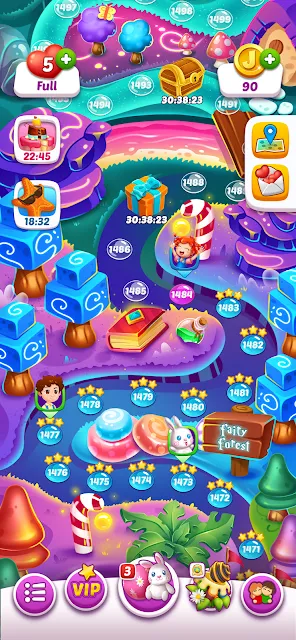
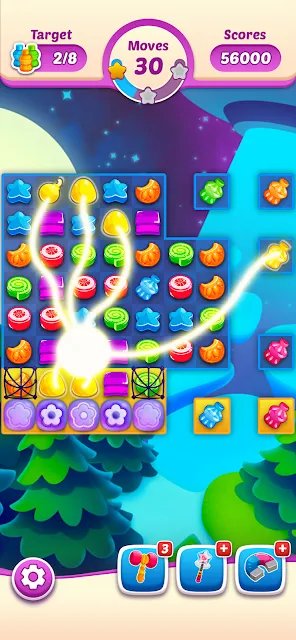
A jelly board mid-clear with the stage target, thirty moves left and the score along the top bar The level map, showing numbered stages winding across a candy landscape A garden scene used between chapters, with collectable items placed around it
Screenshots taken from the app’s Google Play listing and reproduced here to illustrate the guide. Copyright in the images belongs to redBit games.

Write to us

Found a stage where the advice above does not hold, or something that has gone out of date? Send it over and it gets checked.

[email protected]

Email is the only channel on this site. No forms, no newsletter, no data collection anywhere on it — you write, and the reply goes back to the address you used.

Email [email protected] Who answers and when